
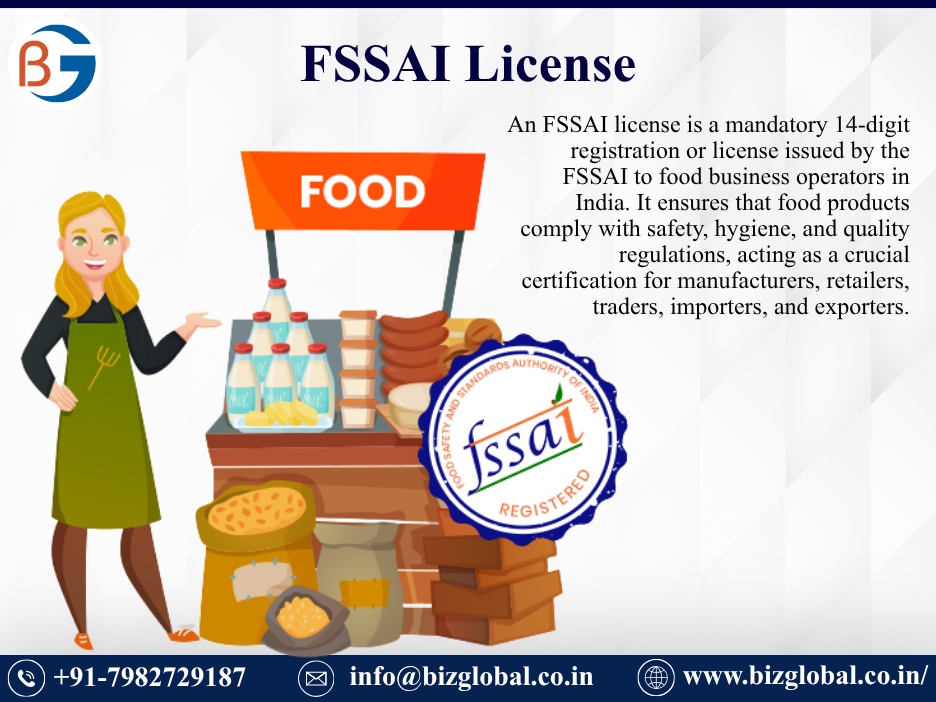
If you are operating a food-related business in India, obtaining an FSSAI Licence is not optional—it is a legal requirement. Issued by the Food Safety and Standards Authority of India (FSSAI), this 14-digit registration or licence serves as proof that a food business complies with prescribed food safety, hygiene, and quality standards.
Whether you run a restaurant, cloud kitchen, food manufacturing unit, grocery store, or online food business, an FSSAI licence is a crucial compliance requirement that helps build consumer confidence while ensuring adherence to food safety regulations.
Why Does an FSSAI Licence Matter?
An FSSAI licence is more than just a regulatory formality. It plays a vital role in ensuring that food businesses operate responsibly and safely.
Some of the key benefits include:
1. Legal Authorization to Operate
The licence grants businesses legal permission to manufacture, process, distribute, store, or sell food products in India.
2. Compliance with Food Safety Laws
It ensures that businesses comply with food safety regulations established by the government.
3. Protection Against Penalties
Operating without the required FSSAI registration or licence can result in penalties, legal proceedings, and even closure of business operations.
4. Consumer Trust and Credibility
Customers are increasingly conscious about food quality and safety. An FSSAI licence acts as a trust certificate, reassuring consumers that the business follows recognized safety standards.
5. Prevention of Health Hazards
The licensing framework promotes hygienic practices and helps reduce risks associated with unsafe food handling and processing.
Types of FSSAI Licences
The type of licence required depends primarily on the scale and annual turnover of the business.
Applicable for: Small food businesses
Turnover: Up to ₹1.5 Crore
Suitable for:
- Small vendors
- Home-based food businesses
- Small food shops
Applicable for: Medium-sized food businesses
Turnover: ₹1.5 Crore to ₹50 Crore
Suitable for:
- Restaurants
- Food manufacturers
- Distributors
- Medium-scale food businesses
Applicable for: Large food businesses
Turnover: Above ₹50 Crore
Suitable for:
- Large food manufacturers
- Importers and exporters
- E-commerce food operators
- Businesses operating across multiple states
Who Needs an FSSAI Licence?
Almost every food-related business in India requires FSSAI registration or licensing.
This includes:
- Restaurants and cafés
- Cloud kitchens
- Home-based food sellers
- Food manufacturers and processors
- Grocery stores and supermarkets
- Food importers and exporters
- Online food sellers and aggregators
A common misconception is that only large businesses require licensing. In reality, any food business, regardless of size, must obtain the appropriate registration or licence.
Key Benefits of Obtaining an FSSAI Licence
Legal and Compliance Benefits
- Ensures compliance with food safety regulations
- Reduces the risk of penalties and legal disputes
- Provides legal authorization to conduct food-related activities
Business Growth Benefits
- Facilitates business expansion across India
- Supports export opportunities
- Improves credibility with financial institutions
- Helps in securing loans and funding
Brand and Consumer Benefits
- Enhances brand reputation
- Builds customer confidence
- Demonstrates commitment to food safety
- Protects consumer health and well-being
"In essence, an FSSAI licence acts as both a compliance shield and a trust certificate for your business."
Documents Required for FSSAI Licence
While document requirements may vary depending on the licence category and state-specific regulations, the following documents are commonly required:
- Aadhaar Card, PAN Card, Passport, or Voter ID of the applicant
- Proof of business premises (utility bill, rent agreement, or ownership documents)
- Passport-size photograph
- Declaration regarding the nature of the food business
- Certificate of Incorporation, Partnership Deed, or Memorandum of Association (as applicable)
- Layout plan or blueprint of the processing unit
- Food Safety Management System (FSMS) Plan
- Product Recall Plan
- Water testing report from an accredited laboratory
- Import Export Code (IEC) for export-oriented businesses
State Licence vs Central Licence
Understanding the distinction between State and Central Licences is important for ensuring compliance.
The State Licence and Central Licence under FSSAI differ mainly in terms of eligibility, authority, and business operations.
A State Licence is issued by the respective State Government authorities and is generally applicable to medium-sized food businesses having an annual turnover between ₹1.5 crore and ₹50 crore. It is suitable for businesses operating within a single state, such as local manufacturers, restaurants, retailers, and distributors. Businesses operating in multiple states are required to obtain a separate State Licence for each state where they have a food business unit.
On the other hand, a Central Licence is issued by the Central FSSAI Authority and is mandatory for large food businesses with an annual turnover exceeding ₹50 crore. It is also required for specific categories of food businesses such as importers, exporters, large manufacturers, and operators having activities across multiple states. A Central Licence provides wider operational coverage and is recognized throughout India for eligible premises and business activities.
Common Misconceptions About FSSAI Licensing
Many businesses unknowingly make compliance mistakes due to misconceptions. Here are some important facts:
Myth 1: Small Businesses Do Not Need FSSAI Registration
Reality: Even small food businesses must obtain the appropriate registration.
Myth 2: Crossing Turnover Limits Has No Impact
Reality: Businesses that exceed prescribed turnover thresholds must upgrade their licence category promptly.
Myth 3: One Licence Covers All Locations
Reality: Each business premises generally requires its own FSSAI licence or registration.
Myth 4: Online Sellers Can Start First and Apply Later
Reality: E-commerce food sellers should obtain FSSAI registration before listing products on online platforms.
Conclusion
Food safety compliance is a fundamental requirement for every food business in India. An FSSAI licence not only ensures legal compliance but also enhances credibility, promotes consumer trust, and supports long-term business growth.
Whether you are launching a home-based food venture, opening a restaurant, or expanding a food manufacturing business, obtaining the correct FSSAI licence is one of the first and most important compliance steps. Ensuring timely registration and maintaining ongoing compliance can help your business operate smoothly while building a strong reputation in the market.
Frequently Asked Questions (FAQs)
1. What is FSSAI Registration?
FSSAI Registration is a food business license or registration issued by the Food Safety and Standards Authority of India for food-related businesses.
2. Who needs FSSAI Registration?
Any person or entity involved in manufacturing, processing, packaging, storage, transportation, distribution, or sale of food products requires FSSAI registration or license.
3. What are the different types of FSSAI licenses?
FSSAI offers Basic Registration, State License, and Central License depending on the turnover and nature of the food business.
4. What documents are required for FSSAI registration?
Identity proof, address proof, business registration documents, photographs, and food business details are commonly required.
5. What is the validity of an FSSAI license?
An FSSAI license can be obtained for a period ranging from 1 to 5 years and must be renewed before expiry.
How  Can Help?
Navigating FSSAI regulations can be complex, especially when determining the correct licence category and documentation requirements. BizGlobal assists businesses with end-to-end FSSAI compliance, including licence selection, document preparation, application filing, renewals, modifications, and regulatory guidance, helping businesses stay compliant and focus on growth.
Contact +91-7982729187 and get your FSSAI License today.